

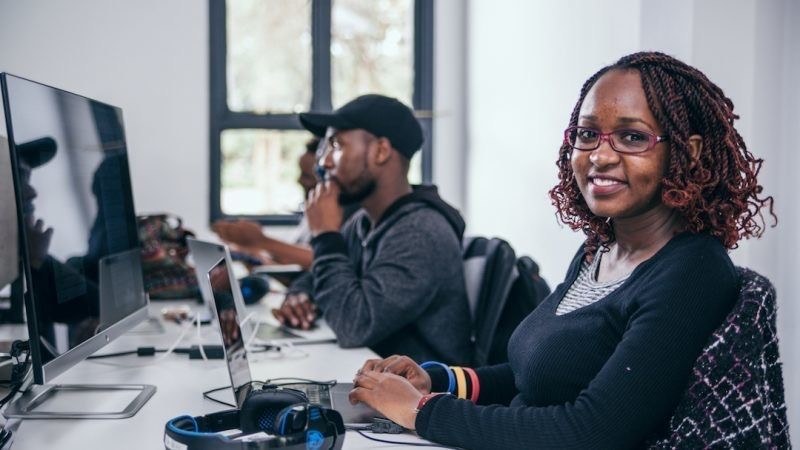
Across Africa, millions of ambitious people are ready to learn, create, build businesses, develop careers and participate more fully in the rapidly changing digital economy.
But education alone cannot close the opportunity gap. Learners need technology, industry knowledge, mentors, devices and connectivity, practical experience, business opportunities, professional networks, internships, customers, employers, investment — and pathways through which newly developed capabilities can become something real.
That requires an ecosystem.
Achebe Africa Digital Academy is building that ecosystem — and we are inviting organisations that believe in African potential to help build it with us.
AADA welcomes collaboration with technology companies, corporations, financial institutions, universities, employers, development organisations, foundations, governments, professional bodies, creative industries and other partners who share our commitment to expanding digital opportunity across Africa.
Don't Just Support African Potential. Help Unlock It.
Partnership Is Bigger Than Funding
Sometimes the most valuable thing an organisation can contribute is something money cannot buy.
Funding matters — it can sponsor scholarships, provide technology, expand programmes, reach more learners. But partnership can go much further. A technology company can provide access to tools. An employer can create an internship. A university can contribute academic expertise. A professional can mentor. A creative agency can provide a real-world brief. A company can challenge ACHEVIANS to solve an actual business problem. A bank can strengthen financial and entrepreneurship education. An industry leader can help us understand where their sector is heading.
The strongest partnerships do not simply fund the journey. They become part of the pathway.
How You Can Partner With AADA
There is more than one way to create opportunity.
01
Sponsor Scholarships
Fund access to AADA learning for individuals or cohorts who may otherwise be unable to participate — 10 women learning AI, 25 aspiring digital entrepreneurs, 50 graduates developing career-ready digital capabilities, 100 young creators building skills for the creator economy, or a programme designed around a particular community, location, skill or opportunity area. Scholarships can potentially be developed as named partner programmes, subject to agreed criteria and appropriate funding.
02
Fund an Entire Cohort
Create a learning journey around an outcome that matters to your organisation — Women in AI, AI for Small Business, Future Digital Entrepreneurs, Graduate Digital Skills, Young African Creators, Future Freelancers, Creator Economy Programme, Digital Business Accelerator. The programme can be designed around clearly defined learning objectives and an agreed participant group. Don't simply sponsor seats. Help create a pathway.
03
Provide Technology
For some learners, the barrier is not ambition or ability — it may be access to the technology required to practise. Technology partners may be able to support through appropriate devices, software access, cloud services, digital tools, internet and connectivity support, technical infrastructure, or learning resources. This can move learners from "I understand it" towards "I can actually build with it."
04
Bring Industry Into the Classroom
Industries change quickly, and artificial intelligence is accelerating that change even further. Partners can contribute through guest masterclasses, expert talks, industry demonstrations, curriculum input, case studies, portfolio reviews, career conversations and emerging-industry insight — helping learners understand not simply what exists today, but where industries may be heading next.
05
Mentor an ACHEVIAN
Behind every experienced professional are lessons that took years to acquire, and somebody else should not always have to learn every one of them the difficult way. Partner organisations can encourage professionals within their teams to contribute through group mentorship, masterclasses, project reviews, expert clinics and selective individual guidance where appropriate. Sometimes a relatively small contribution of expertise can create significant learning value.
06
Create Real-World Challenges
Imagine a business bringing AADA an actual challenge: how could we reach a younger audience? How could AI improve this process? How should we launch this product digitally? Learners could work on selected industry challenges as part of appropriate learning experiences — gaining practical exposure while partners gain fresh thinking. Don't only tell learners what industry requires. Let them experience the challenge.
07
Open Internships & Work Experience
One of the hardest stages of building a career is gaining initial experience. Partner organisations can help by opening appropriate internships, work experience, project opportunities and entry-level pathways to suitably prepared learners. AADA cannot guarantee placements, but we can work towards bringing education and opportunity closer together.
08
Hire AADA Talent
As AADA develops and learners build stronger portfolios and capabilities, we want to create better connections between emerging talent and organisations looking for digital skills — across AI, digital marketing, content creation, graphic design, video production, web and technology, data, digital business and other Academy pathways. The long-term ambition: AADA should not only become somewhere people come to learn. It should become somewhere organisations come to discover emerging African talent.
09
Commission Freelance Talent
Businesses constantly need a design, a video, a website, a campaign, content, research, digital support, automation or specialist project work. As appropriate systems and quality standards develop, AADA can work towards helping connect capable ACHEVIANS with project-based opportunities — giving somebody their first serious brief.
10
Support African Entrepreneurs
Partners can support AADA's entrepreneurship ecosystem through business mentorship, expert sessions, startup challenges, professional services, technology access, market connections and other forms of enterprise support. A financial institution might provide financial education. A legal organisation might teach business fundamentals. An established business might become an early customer. Sometimes the most useful support for an entrepreneur is access to someone or something their business genuinely needs.
11
Support Creators & Africa’s Creative Economy
Africa's creators are building businesses around content, film, fashion, design, photography, media, music, storytelling and digital audiences. Partners in media, entertainment, fashion, advertising, technology and the creative industries can contribute through briefs, competitions, mentorship, tools, masterclasses, commissions, collaborations and professional exposure — with connections through the wider AADA ecosystem and Achebe Media offering further opportunities to build work and experience.
12
Research the Future With Us
AADA welcomes collaboration with universities, research organisations, employers, technology companies and development institutions interested in understanding emerging digital skills, AI adoption, entrepreneurship, future-of-work capabilities, barriers to digital participation, learner progression and African digital opportunity. Research can help AADA improve what it teaches while contributing to a better understanding of the changing skills landscape.
13
Reach Communities With Us
Community organisations, educational institutions, nonprofits, local leaders and other partners can help AADA connect appropriate learning opportunities with communities that may otherwise remain outside them — targeted initiatives for young people, women, graduates, aspiring entrepreneurs, creators and underserved communities, depending on programme objectives and available funding. Digital opportunity becomes more meaningful when access becomes wider.
Build a Partnership Around Your Organisation
We don't need every partner to do the same thing.
The strongest collaboration may begin with a simple question:
"What can your organisation contribute that could genuinely expand opportunity?"
For one company, the answer may be funding. For another, technology. For another, expertise, internships, customers, research, mentors, access to communities — or a combination of several.
We can explore partnership models that align AADA's mission with a partner's capabilities and appropriate social-impact, talent-development, education or innovation objectives.
Imagine What We Could Build Together
A technology company could create an AI Skills Programme. A bank could support a Digital Entrepreneurship Cohort. A university could collaborate on a Future Skills Initiative. A creative agency could launch an African Creative Talent Challenge. A professional services firm could provide business and career masterclasses. A global employer could create an Internship Pathway. A telecommunications company could support connectivity for learners. A software company could provide access to professional tools. A media company could commission emerging African creators.
Or a business could simply say: "We have a real problem. Let your learners try to solve it."
That is when partnership becomes more than sponsorship. It becomes participation.
What Partners Should Expect From AADA
Partnership requires accountability from both sides.
We want organisations to know what they are supporting and what happened because of it. Depending on the partnership, this can include appropriate programme objectives, agreed deliverables, learner participation and completion information, programme updates, outcome reporting, financial accountability, case studies where consent has been provided, and lessons that can improve future programmes.
We should not manufacture positive results to make a partnership look successful. Where something works, we should understand why. Where something needs improvement, we should learn from it.
Partnership deserves more than visibility. It deserves evidence.
What Success Could Look Like
Not simply how many people enrolled. What became possible afterwards?
As AADA grows its measurement systems, partnership outcomes may include learners completing programmes, practical projects completed, portfolios developed, new capabilities demonstrated, businesses or products launched, internships or work experience accessed, freelance or career opportunities pursued, technology access expanded, entrepreneurs supported, and learners progressing into further opportunities.
Not every programme will measure the same things. The measurement should follow the purpose of the partnership.
Because activity tells us what we did. Outcomes help us understand whether it mattered.
Become Part of the AADA Ecosystem
Fund. Teach. Mentor. Equip. Challenge. Hire. Connect.
There is no single definition of an AADA partner. You could fund the opportunity, provide the technology, share the expertise, set the challenge, mentor the learner, open the internship, commission the freelancer, hire the talent, support the entrepreneur, connect us to a community, or help us understand what Africa's digital economy will need next.
Whatever you bring, bring something that helps move people from potential towards possibility.
Africa does not lack ambition. It does not lack creativity. It does not lack ideas. It does not lack people capable of extraordinary work.
The challenge is ensuring more people can access the skills, technology, networks, experience and opportunities required to turn that potential into capability. AADA cannot build that future alone. And we should not try to.
Together, we can build stronger pathways from learning to capability, from capability to opportunity, and from opportunity to economic participation.
Built in Africa. Paid Globally.™
Africa's Digital Future Needs Builders. Become One of Them.
The Academy can teach the skill. Partners can help open the world around it.